No-code management software — composed, not inherited
Projects, collections, dashboards and Drive. Forms carry the logic. The client still gets the system they chose: payroll, assets, HR, legal, GST packs.
Inside DS Office
The client picks the software. You still see one product.
Project → collections → dashboard → form → Drive. Same pattern for payroll, assets, a law desk or a school. Forms do the work underneath. The screen the team opens is management software.
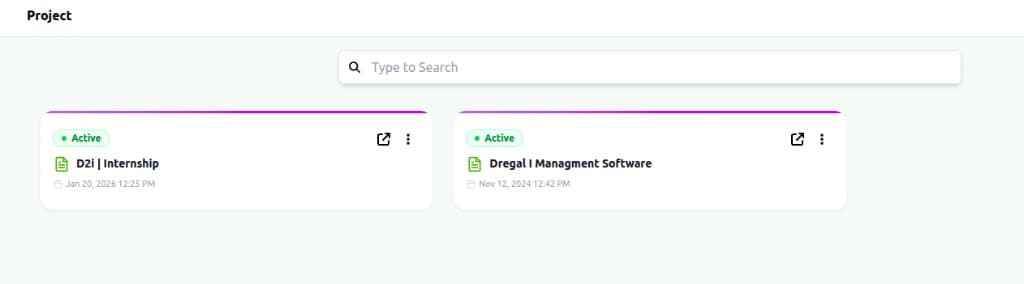
Projects — one workspace per company
Open a project. That is the firm. Everything else lives inside it.
No-code management software
Clients do not buy a form builder. They compose a working system — projects, collections, dashboards, Drive — the way enterprise no-code desks are meant to feel.
· Projects as company workspaces
· Collections as modules
· Records the team lives in
Forms carry the logic — quietly
Under every screen is a form: fields, relations, validations. That is the engine. What the client sees is HR, a law desk, payroll, assets — whatever they named.
· Custom fields & relations
· Approvals and rules
· Reusable templates
Company-wide flow
Payroll talks to people. Assets talk to locations. Billing talks to clients. One graph, one set of roles — not five products glued with exports.
· Payroll & attendance
· Asset register
· Billing, HR, legal — same pattern
Documents that know the record
GST reports, invoices, affidavits. Template tags, chained filters, file-name builders. The pack is generated from live data.
· Template engine
· Configure file names
· Drive next to records
Entire company, one product
Build the operating flow of the organisation — then run it.
Payroll, assets, people, billing, legal files, Drive. Each is a collection with custom logic. Together they are the company. No-code: you design it; DS Office hosts it.
01
Workspace
One project is the company. Roles, Drive and collections start here.
02
Collections you pick
People, payroll, assets, billing, cases, vendors — only what the organisation needs.
03
Records & forms
Each collection has a form with fields, relations and rules precise to that desk.
04
Logic & documents
Approvals, calculations, GST templates, file-name builders — configured, not coded.
05
Operate
Dashboards, Drive, reports. The end product is the management software the client chose.
PayrollAssetsHRBillingLaw deskDriveReports
DS Office capabilities
No-code underneath. Management software on the screen.
Inspired by how serious no-code desks are sold: you compose applications. Forms are the material. The client still gets payroll, assets, HR or a law firm — whichever they picked.
Projects & collections
A project is the company. Collections are the modules — payroll, assets, people, matters — named by you.
Active workspaces
Search across collections
Dashboards that feel like software
Tagged columns, files, bulk actions. The team works a management desk, not a blank form.
Filters and roles
Record view + edit
Forms as the quiet engine
Every record is a form with fields, relations and rules. That is how no-code suites actually work — the end product is still the system the client chose.
Custom fields
Scenario logic
Relations across the firm
Link an asset to a person, a payroll line to attendance, a matter to a client. One graph.
Cross-collection links
No orphan records
Drive & documents
Invoices, affidavits, templates. GST reports with template tags and a file-name builder — custom logic, no code.
Template engine
Configure file names
Same desk on every device
Full workspace on mobile. Roles travel with the login.
Responsive
Same permissions
Coming soon
AI-based management
Stop creating records by hand. Prompt the desk.
First languages: English and Kannada. Type what should happen — a record, a payroll run, a simple analytic. DS Office writes it into the collection you already designed. Regional languages will follow; we are not making that the story today.
You type
“Add a new asset: Dell laptop, assigned to Accounts, purchased June 2026.”
DS Office AI
Maps the prompt to your collections, fields and roles
Done in the system
Record created in Assets · linked to People · Drive folder ready
Analytics prompt
“Show overdue invoices this month.”
The honest comparison
Why operators pick DS Office
Depth that used to mean a multi-year programme — sized for firms that still answer their own phones.
What you care about
DS Office
Traditional suites
What you buy
A management system you compose
A catalogue of modules
How it is built
No-code collections, forms, logic
Consultants and custom code
Company flow
Payroll, assets, HR, legal — one project
Separate products, exports
Documents
Templates + file-name builder
Locked print layouts
Go-live
Weeks
Often 12–18 months
Coming soon
Prompt in English or Kannada
Still a form for every record
14 days. No card.
Stop running the company from twelve spreadsheets.
DS Office is no-code management software: payroll, assets, HR, legal, billing — whichever desk you pick — on one workspace.